Two days in Vienna is never enough. But if two is what you have, take this route: central, short distances, no rushing. The plan works on foot plus two or three tram rides, and it deliberately leaves gaps for the thing Vienna does best: sitting down, watching, losing track of time.
Before you set off: arrival and tickets
From the airport, the CAT (City Airport Train) gets you to Wien Mitte in 16 minutes; the cheaper S7 takes about 25 minutes and stops at the same platforms. If you arrive by train, you land at the main station and the U1 takes you to Stephansplatz in a few minutes.
For a weekend, a 48-hour pass from Wiener Linien is worth it: buy once, ride everything - metro, tram and bus included. Single tickets only make sense if you do almost everything on foot, which in Vienna is genuinely possible; the centre is compact.
Day 1: Old town, Hofburg, coffee house
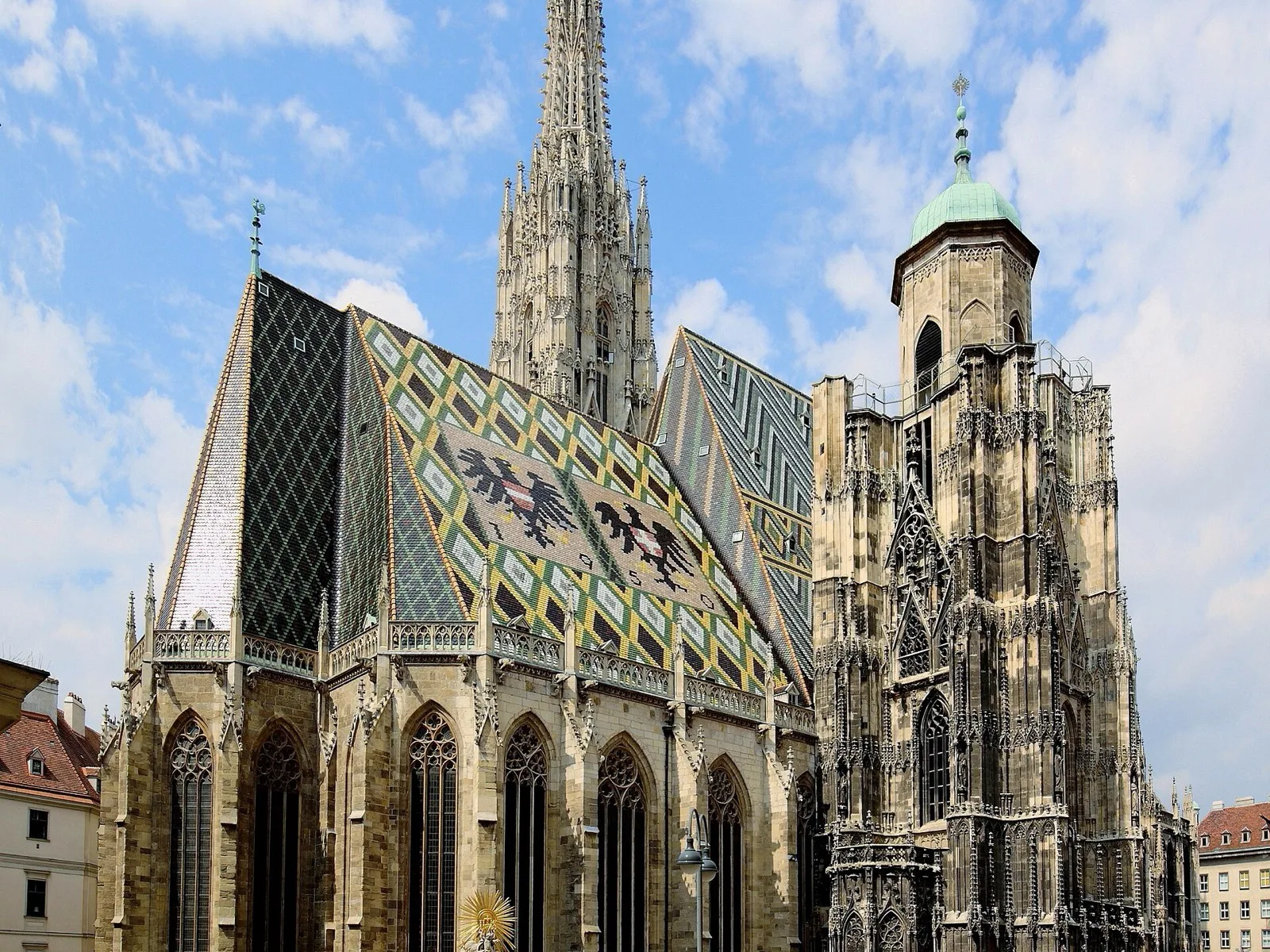
Breakfast at Cafe Central or Cafe Sperl. Show up before eight and there’s no line. From there walk to St. Stephen’s Cathedral, through Graben and Kärntner Straße. If you like heights: 343 steps up the south tower. On a clear day the view stretches to the Vienna Woods, and from up there you see how small the Innere Stadt really is - everything that matters sits within a 15-minute walking radius.
By noon, walk through the Hofburg, peek into the Spanish Riding School (even without a show, the morning training is worth a look), then the Albertina, because the world’s most important print collection hangs there and it’s rarely crowded. If you need a break between the two: the Burggarten is right next door, with the Mozart monument and plenty of lawn.
For the afternoon you have two options. Either stay in the old town and drift: Michaelerplatz, Kohlmarkt, the Ferstel passage, an ice cream or a second coffee in between. Or pick one of the Ringstraße museums - the Kunsthistorisches Museum is five minutes from the Hofburg. More ideas in our overview of sights.
Dinner around Spittelberg in the 7th district: little lanes, restaurants with courtyards, the right dose of Viennese cosiness. The walk there passes the MuseumsQuartier, where you can settle into the courtyard after dinner. If you want to stretch the evening, Neubau has the highest density of good bars outside the centre.
Day 2: Naschmarkt, Belvedere, Heuriger
Saturday or Sunday? Doesn’t matter, the Naschmarkt always works. Falafel, sushi, sheep’s cheese, Wiener Schnitzel: all within 500 metres. If you’re lucky and it’s Saturday, you walk straight into the flea market at the western end - bric-a-brac, records, porcelain, and haggling is part of the deal. On Sundays the market stalls are closed, but many of the restaurants along the market are open and serve breakfast.
Take the tram to the Belvedere. Klimt’s “Kiss” hangs in the Upper Belvedere, and the gardens are free and worth the trip on their own: the baroque grounds step down in terraces towards the city, with the towers of the old town in the frame. Plan around 90 minutes for the museum, closer to two hours with the gardens.
Late afternoon: tram 38 to Grinzing (tip: catch it at Schottentor). Heuriger atmosphere, a cold-cuts platter, a quarter litre of Grüner Veltliner. A Heuriger visit isn’t a restaurant visit: you fetch your food from the buffet yourself, the wine comes to the table, and nobody hurries you out. If you still have energy: 30 minutes uphill to the Kahlenberg, where the whole city lies beneath you with the Danube as a silver ribbon through it.
Where to sleep
For 48 hours, location beats everything else. The shortest walks come with a room in the Innere Stadt; the best value usually sits in Mariahilf or Neubau, both walkable to the Naschmarkt and the old town. If you like it more personal, browse the boutique hotels - Vienna has a surprising number of them. A sorted overview of every property is at hotels in Vienna.
What the weekend costs
Rough orientation: a coffee-house breakfast usually runs 10 to 20 euros, a main course in a beisl 15 to 25 euros, a Melange in between stays under 7 euros. Museums charge roughly 15 to 20 euros depending on the house; the cathedral’s south tower is far less. At a Heuriger you generally eat and drink cheaper than in the centre. With a mid-range hotel, a couple gets through a normal weekend on roughly 400 to 600 euros all-in - with plenty of headroom above, naturally.
Best time for a 48-hour trip
May, June and September are the safest months: warm enough for garden terraces and Heurigen, without the high-summer heat. Advent has its own magic with the Christmas markets but is the busiest time of the year. January and February are quiet and cheap, though some garden terraces and Heurigen close.
What to skip
Skip the Schönbrunn tour on a weekend. Ninety minutes there and back plus queueing, and you no longer have three hours left for the centre. Schönbrunn deserves its own trip. Same logic: no Fiaker carriage ride if the budget is tight - you can walk the route in the same time, and the view is better on foot.
Frequently asked questions
Is 48 hours enough for Vienna? For a first, honest impression: yes. You see the old town, one major museum, the Naschmarkt and a Heuriger. What’s missing are Schönbrunn, the Prater and the Danube - good reasons for a second visit.
Do I need reservations? For proper restaurants in the evening: yes, especially Friday and Saturday. Coffee houses and Heurigen mostly work without one; arriving early helps.
Is a Wiener Linien pass worth it for two days? If you take more than four rides, yes. The 48-hour pass also spares you buying a ticket before every trip.
Is Vienna shut on Sundays? Shops largely yes; museums, coffee houses, restaurants and pools are open. Sunday is a good museum and strolling day.