50 euros a day in Vienna is possible, but only with choices. Vienna is not a bargain city like Budapest or Krakow, but it is not Zurich or London either: public transport is cheap, tap water is superb, and many of the most beautiful places cost nothing. What gets expensive are the bed, the museums, and every spontaneous “let’s just sit down somewhere”. Here is a realistic daily tally, item by item.
Bed: 0-30 euros
- Couchsurfing or staying with friends: 0.
- Hostel bunk (e.g. A&O Wien Stadthalle or Hostel Ruthensteiner): 25-40 euros in a dorm, depending on season and weekday.
- Pension like Kolping Wien Central or Hotel Pension Wild: from 65-70 euros for a single, from 90 for a double.
50 a day only works if you sleep in a hostel. Solo in a hotel does not fit the budget - but two people sharing a pension double get down to about 45 euros a head for the bed, which puts the target within reach. For more cheap options in one place, browse the budget category. Rule of thumb for location: anything inside the Gürtel ring road with a metro stop is good enough. Districts like Mariahilf or Neubau are walkable to the centre and noticeably cheaper than the 1st district.
Breakfast: 0-5 euros
- Bakery (Anker, Ströck, local): coffee plus a roll with butter and jam, 4-5 euros.
- Supermarket (Billa, Hofer, Lidl): under 3 euros.
- Hostel or pension breakfast: often included - check beforehand, it shifts the whole tally.
Lunch: 6-10 euros
- Lunch menu at a Viennese beisl: 9-12 euros for two courses. This is the best deal in town - the same kitchen easily costs double à la carte in the evening.
- Sausage stand: Käsekrainer with mustard and bread, around 5 euros.
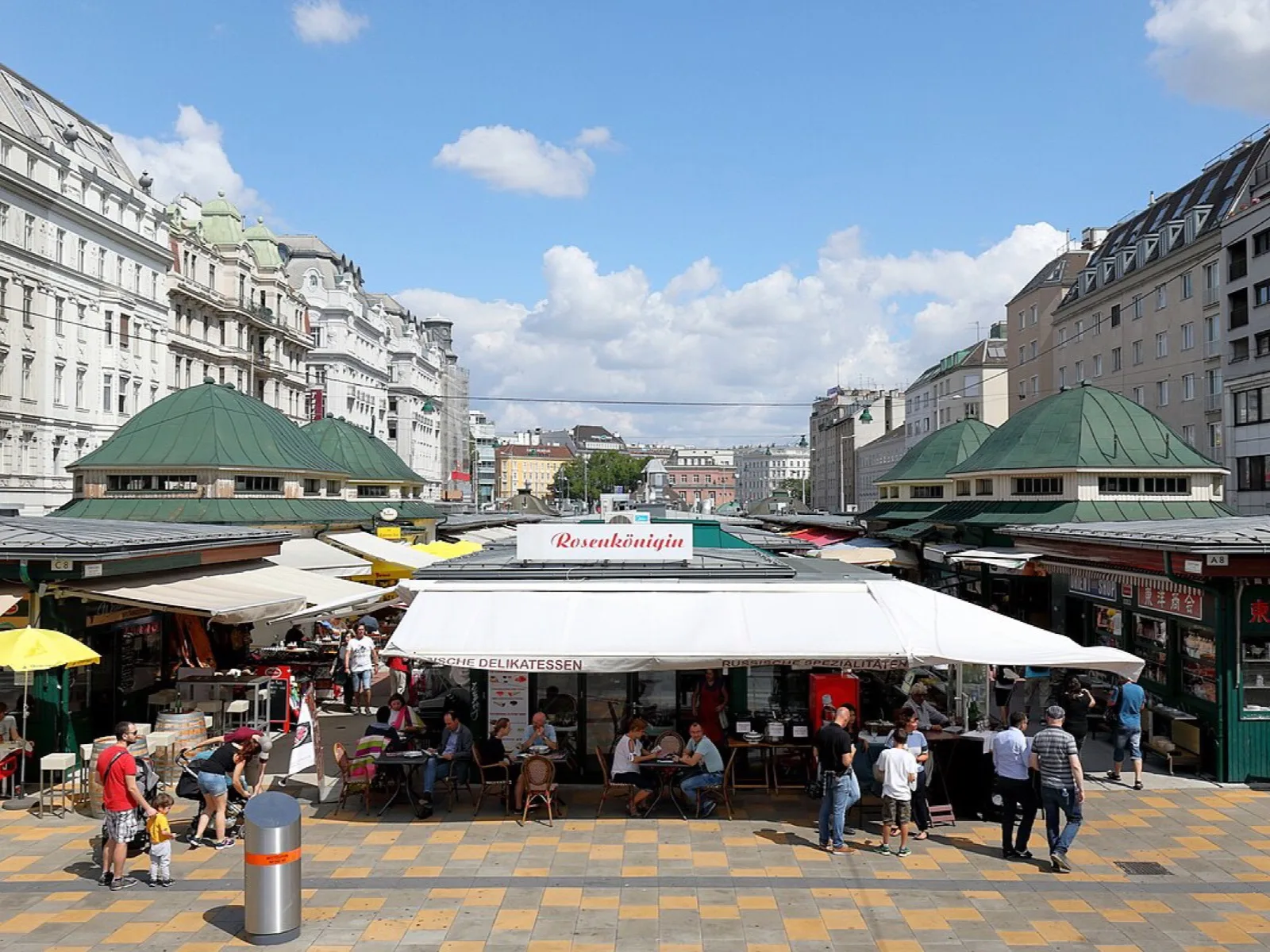
- Naschmarkt stand at lunch: falafel or a small plate, 8-9 euros.
- Trzesniewski (sandwich classic, Dorotheergasse): three open sandwiches plus mineral water, around 8 euros.
- University canteens: Around the campus and TU areas you find cheap lunch plates, often without needing a student card.
Coffee house or snack: 4-6 euros
- A Melange at a coffee house: 4-5 euros. For that you sit as long as you like, and the glass of water keeps getting refilled.
- Snack to go: 3-4 euros.
Dinner: 10-15 euros
- Beisl: Bauernschmaus, goulash, daily schnitzel special between 10 and 14 euros.
- Trzesniewski in the evening: two sandwiches plus a beer, 6-7 euros.
- Self-catering via supermarket: 5-7 euros. Many hostels have shared kitchens.
Sights: 0-17 euros
Using the list of free things to do you can fill a day for 0. If you want at least one museum, budget 15-17 euros admission. The good news: a large part of the Vienna feeling costs nothing. The main nave of Stephansdom, the Hofburg courtyards, wandering the Naschmarkt, Volksgarten, Burggarten and Stadtpark, the Danube Canal with its street art, the hidden courtyards of the Innere Stadt - all free. For an overview of the key addresses, see the sights hub.
Public transport: 0-8 euros
The 24h ticket covers a full sightseeing day. If you stay several days, a weekly pass or the 48h/72h tickets usually work out better. And Vienna is a walking city: Stephansplatz to the MuseumsQuartier is 15 minutes on foot, the Naschmarkt about 20. Walk the centre and buy a single ticket only for longer hops (Schönbrunn, Donauinsel) and you save without losing anything.
Tally for day 1 (dorm, one museum)
- Hostel: 30
- Bakery breakfast: 5
- Sausage stand lunch: 5
- Melange: 4
- Beisl dinner: 12
- Museum (Belvedere): 16
- 24h ticket: 8
Total: 80 euros. With some skill (supermarket sandwich for lunch, free sights) you can get under 50.
The realistic 50-euro version
- Hostel or couchsurfing: 25 or 0.
- Bakery breakfast: 4.
- Supermarket lunch (filled roll, yoghurt, apple): 5.
- Walking instead of the metro in the afternoon: 0.
- Pasta or bread and cheese for dinner: 6.
- Free sights (Volksgarten, Stephansdom inside, Donauinsel): 0.
- Single ticket for one longer stretch: 2.40.
Total: around 42 euros. It works. The eight-euro buffer is your margin for a Melange or a late beer on the Danube Canal.
When you travel matters as much as how
The season shifts the maths more than any money-saving trick. November, January and February (outside trade fairs and New Year’s Eve) are the cheapest months - hostel bunks and pension rooms cost noticeably less than in May or December. Advent is high season despite the cold, because the Christmas markets fill the city. If you are flexible, travel midweek: Sunday to Thursday beds are almost always cheaper than Friday and Saturday.
Where to save painlessly
- Tap water (Vienna’s mountain spring water is among Europe’s best drinking water, free and completely safe). Carry a bottle, refill as you go.
- Lunch menus instead of evening à la carte.
- Single ticket plus walking instead of a 24h pass on low-movement days.
- Bundle your museums: all the big houses on one day, then do the maths on a city card, instead of spreading admissions across the week.
- Order tap water in restaurants instead of mineral water - normal in Vienna and not a faux pas.
Where you should not save
- Skipping the coffee house experience: a Melange and an hour at a marble table, that is Vienna.
- Skipping a proper schnitzel or Tafelspitz meal: you want to have done that.
- Skipping a Heuriger evening: that is Vienna in summer. The wine at a Heuriger is cheap anyway - it only gets expensive if you lose yourself at the buffet.
Frequently asked questions
Do 50 euros work in December too? Difficult. Bed prices climb noticeably during Advent, and punch and market snacks add up fast. In December, plan on 60-70 euros a day, or switch your trip to January.
Is a city pass worth it for budget travellers? Usually not. Passes only pay off from three or four paid attractions per day - exactly what you are not doing in 50-euro mode. Single tickets for one or two selected museums are almost always cheaper.
Can I pay by card, or do I need cash? Cards work almost everywhere, including many sausage stands. A small cash reserve still makes sense: some beisls, market stalls and public toilets take coins and notes only.
Is getting around at night affordable? Yes. The metro runs all night on Fridays and Saturdays, night buses take over on weekdays - all included in the normal ticket. You practically never need a taxi.