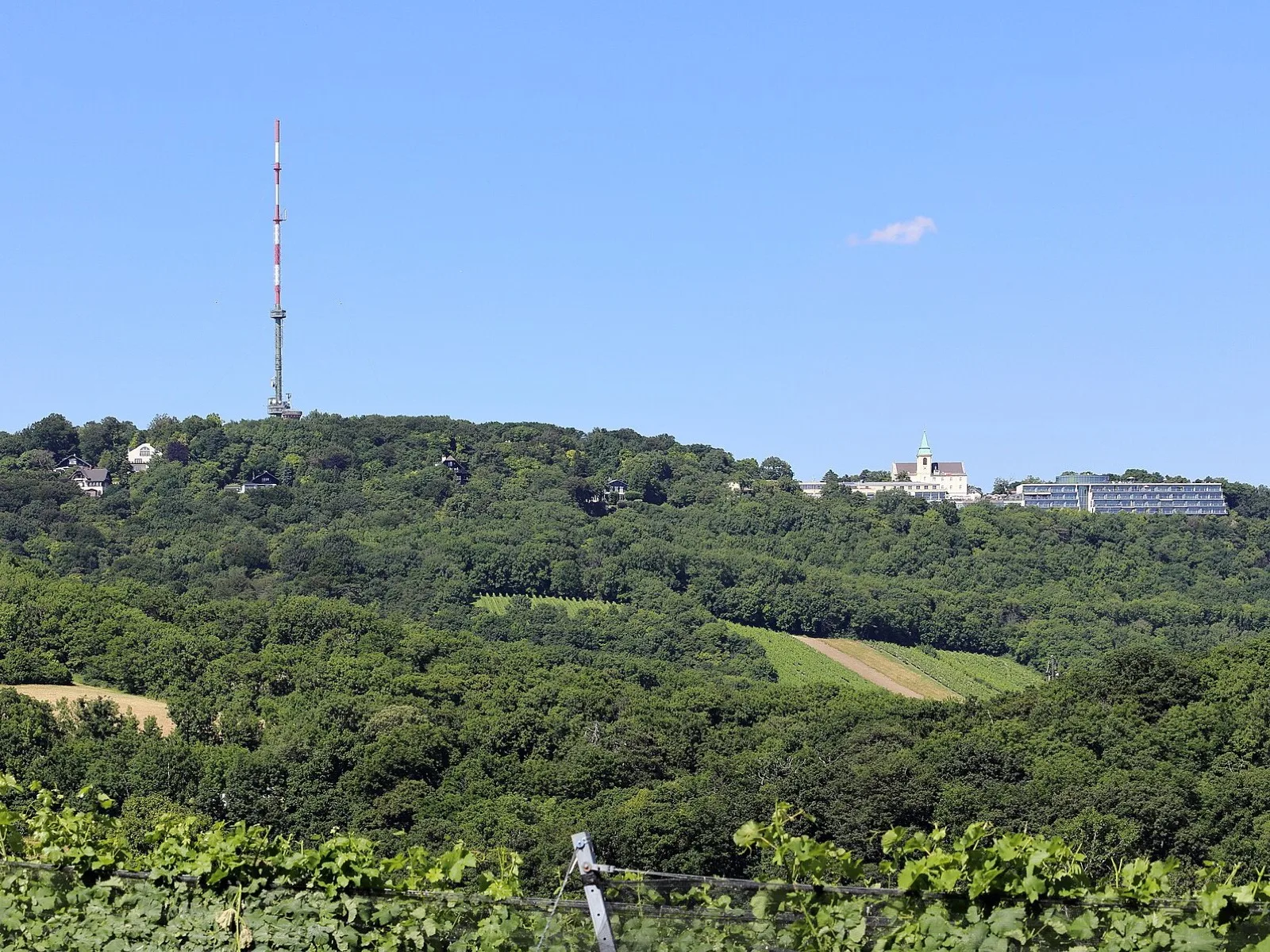
Heuriger means: young wine from the producer’s own vineyard, poured by the winemaker. You spot one by the pine branch hanging over the door and the “Ausg’steckt” sign on the street. If the branch is out, they’re open. The word comes from “heuer”, Austrian for “this year” - traditionally you drink the wine of the most recent harvest. Vienna is the only major capital in the world with serious winegrowing inside its city limits: around 700 hectares of vines grow within the city, most of them on the slopes of the 19th district. Which is why the Heuriger isn’t a tourist act but everyday life - Viennese families sit here on Sunday afternoons just as students do on Thursday nights.
What makes a real Heuriger
Not every place with a vine-covered terrace qualifies. The classic Buschenschank may only sell its own wine and cold food - a rule that goes back to Emperor Joseph II, who allowed winemakers to pour their own wine directly in 1784. Alongside these there are Heuriger restaurants, open year-round and serving hot dishes too. Both have their place: the Buschenschank is the original, the restaurant version is easier to plan around. If you want the genuine “Ausg’steckt” experience, look for the pine branch and the handwritten sign.
Where to go
In Grinzing (last stop of tram 38) you’ll always find something, but three addresses stand out:
- Mayer am Pfarrplatz (Pfarrplatz 2). Beethoven once lived here while working on the Ninth Symphony. Big courtyard, classic menu, lively. One of the best-known houses in the city, and busy accordingly.
- Heuriger Sirbu (Kahlenbergstraße 210). Halfway up the Kahlenberg. View across the vines down to the Danube, quiet. Get there by car or bus 38A, then a short walk.
- Reinprecht (Cobenzlgasse 22). A big house in a former monastery, plenty of tourists, but the live music sets the mood. If you want to hear Schrammelmusik once in your life, this is the place.
If you prefer off the beaten track: Stammersdorf (21st district) is Heuriger-Vienna without the tourists. Less polished, more honest, with cellar lanes that feel like the countryside. Nussdorf and Neustift am Walde, both also in Döbling, are good alternatives to Grinzing: just as pretty, noticeably more relaxed. Tram D takes you to Nussdorf, bus 35A to Neustift.
When
May to October is Heuriger season. Sitting inside only becomes pleasant from late May - the garden is what it’s all about. Thursday to Sunday is the safe bet. No need to reserve, but mid-week is more relaxed.
The best time of day: late afternoon. Arrive around 5 pm, secure a good garden table, watch the sun sink behind the vines and stay as long as it’s pleasant. In September and October the Sturm season kicks in, and weekends get busier still. Many Buschenschank operations only open for a few weeks at a time - the boards at the village entrances or a quick look at a winery’s website tell you who currently has the branch out.
What to order
- G’spritzter (white wine with soda water). The default. Summery.
- A quarter litre of Grüner Veltliner. Vienna’s main grape, dry, crisp.
- Wiener Gemischter Satz. The city’s speciality: different grape varieties planted together, harvested together, pressed together. A protected designation of origin since 2013 - try it.
- Brettljause: speck, sausage, cheese, spreads, bread. Enough for two.
- Schmalzbrot with onion. A classic.
- Sturm in autumn (September/October): cloudy, half-fermented must. Deceptively sweet, has a kick.
At a buffet-style Heuriger you fetch the food yourself at the counter: point at what you want, pay by weight or portion. Drinks are brought to your table. First time? Just watch how the locals do it for a minute.
What the evening costs
The Heuriger is one of Vienna’s more affordable pleasures. A quarter litre of wine or a G’spritzter costs noticeably less than a glass in an inner-city restaurant, and a proper Jause for two stays reasonable. As a rough guide: an evening with wine, food and no hurry usually comes to about the price of a mid-range restaurant main course per person. Payment is often cash-only - cards don’t work everywhere, so bring some notes.
Getting there and back
Tram 38 from Schottentor to Grinzing, around 25 minutes. Last tram around 11 pm, night bus N38 runs after that. A taxi works too; a bike is only fun downhill. Tram D goes to Nussdorf, bus 38A continues from Grinzing up the Kahlenberg. A standard Wiener Linien ticket covers everything - the 19th district sits entirely inside the core zone.
If you want to stretch the evening, combine the Heuriger with sunset on the Kahlenberg: take the 38A up first, soak in the view over the city, then stop halfway down or back in Grinzing for the wine. Staying overnight near the vineyards works too - Döbling and its surroundings have quiet hotels away from the inner-city buzz, and you’re still at the Ringstraße in 20 minutes.
A little Heuriger etiquette
- Sharing tables is normal. At the long tables people squeeze together; a quick “is this seat free?” is all it takes.
- No tipping stress: rounding up, coffee-house style, is fine.
- Wine is ordered by the quarter or eighth litre, not as “a glass of wine”.
- Bringing your own food used to be standard at the Buschenschank; today it depends on the house - ask if unsure.
- Loud is fine, rowdy isn’t. The Heuriger is sociable, but it’s not a beer tent.
Frequently asked questions
Do I need to reserve? At the big Grinzing houses on weekends: better yes, especially for groups. Mid-week, or in Stammersdorf and Neustift, you’ll almost always find a table on the spot.
Is there anything for people who don’t drink wine? Yes. Grape juice, soda with lemon and alcohol-free spritzers are on every menu. The Jause alone is worth the trip.
Are Heurige closed in winter? The classic Buschenschank mostly yes - they only open in stretches. Heuriger restaurants like the big Grinzing houses, on the other hand, run almost year-round.
Can I take wine home? At most wineries yes, sold straight from the farm gate. A bottle of Gemischter Satz from the winemaker is a better souvenir than anything you’ll find at Stephansplatz - more on that in our shopping guide.