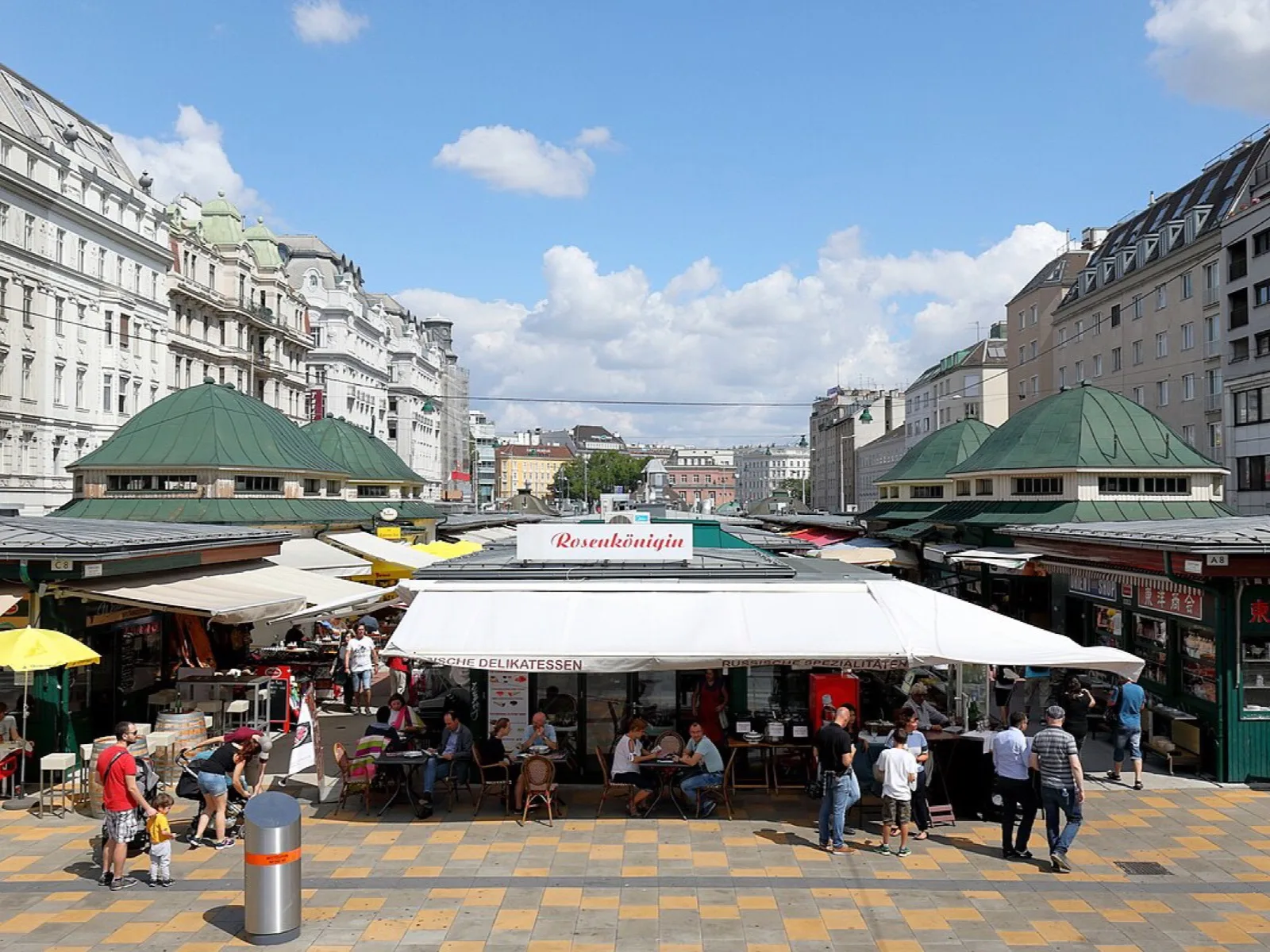
Viennese cuisine is not Austrian cuisine. It’s an inheritance from the multi-ethnic empire: Bohemian dumplings, Hungarian goulash, Italian and Bohemian pastries, plus home-grown classics that exist nowhere else. Vienna is, incidentally, the only city in the world with a distinct cuisine named after it - the city, not the country. These are the dishes you should have eaten before you leave.
The ten
1. Wiener Schnitzel. Veal, breaded in dry crumbs, fried swimming in clarified butter. The tell-tale signs: the schnitzel is bigger than the plate, and the breading ripples (“soufflieren”) - it sits loosely on the meat instead of clinging to it. It comes with potato salad or parsley potatoes and a wedge of lemon, never with sauce. Classic houses: Figlmüller, Plachutta, the Schnitzelwirt in Neubau. The pork version is cheaper and is properly labelled “Wiener Art” - if the menu just says “Schnitzel”, ask.
2. Tafelspitz. Boiled beef (the tafelspitz is the cut from the rump) with root vegetables, apple horseradish, chive sauce and rösti. Emperor Franz Joseph’s favourite meal, and to this day the Sunday dish of bourgeois Viennese cooking. Plachutta specialises in it and serves the meat in a copper pan with its broth, turning it into a full menu. The Meierei in the Stadtpark does a finer version.
3. Goulash. Adopted from Hungary, but darker, thicker and braised longer in Vienna. It comes as Saftgulasch (with bread dumpling) or as Fiakergulasch - named after the carriage drivers - topped with fried egg, sausage and gherkin. You’ll find goulash in practically every Beisl, and it’s the classic second-day dish: reheated, it tastes better, as the Viennese will freely admit.
4. Backhendl. Half a chicken, cut up, breaded and fried golden - the summer dish of old Vienna, traditionally with lamb’s lettuce and pumpkin-seed oil. In the Beisln it’s often only on the menu seasonally; in the garden restaurants and at the Heurigen it belongs to summer like the Spritzer.
5. Apfelstrudel. Paper-thin stretched dough - you should be able to read a newspaper through it, the rule says - filled with apples, raisins, cinnamon and breadcrumbs. At the Café Residenz by Schönbrunn you can watch in the show bakery as the dough is pulled out over the edge of the table. Warm with vanilla sauce, or classic with just icing sugar.
6. Sachertorte. Two chocolate sponge layers with apricot jam between them, dark chocolate glaze on top, served with unsweetened whipped cream. The original is at Hotel Sacher; Demel on Kohlmarkt makes the historically contested alternative - the dispute over the “original” once even occupied the courts. Honest answer: both are good, and the difference lies mainly in the jam layer.
7. Kaiserschmarrn. A sweet pancake torn apart in the pan, with raisins, icing sugar and plum or apple compote. In Vienna it’s entirely legitimate as a main course, not just dessert - a sweet dish as a meal is its own category here. Café Sperl and Café Landtmann do solid versions; made fresh it takes 15 to 20 minutes, which is a good sign.
8. Buchteln. Fluffy yeast-dough buns from Bohemia, filled with Powidl (plum jam) or apricot jam, often served with vanilla sauce. Café Hawelka traditionally serves them fresh from the oven late in the evening - one reason to schedule your coffee-house visit for after midnight.
9. Marillenknödel. Curd or potato dough, a whole apricot inside, toasted crumb-sugar outside. A summer classic for apricot season in July and August, when the Wachau apricots ripen. Like Kaiserschmarrn, happily eaten as a main course.
10. Käsekrainer. A cheese-filled sausage from the sausage stand, affectionately and crudely nicknamed “Eitrige” in Viennese dialect. With a heel of bread, sweet or hot mustard and a can of beer. The Würstelstand is Vienna’s most democratic institution: at night, people in suits stand next to night owls. Bitzinger by the Albertina is the best-known stand in the centre.
What to drink with it
- Grüner Veltliner with schnitzel - Vienna’s white-wine standard, often stretched with soda as a “Spritzer”.
- Zweigelt with tafelspitz or goulash.
- Sturm (cloudy, half-fermented grape must) in autumn - available only for a few weeks.
- Wiener Melange with strudel or kaiserschmarrn.
- Ottakringer from Vienna’s own brewery with a käsekrainer.
Vienna has one thing over every other capital: serious winegrowing inside the city limits. At a Heuriger on the city’s edge - for instance in Döbling with Grinzing and Nussdorf - you drink the wine where it grows, with cold platters from the buffet.
Where to eat, where not
In the Innere Stadt the density of tourist restaurants is high and quality varies. Reliable addresses: Plachutta Wollzeile (tafelspitz), Figlmüller Bäckerstraße (schnitzel), Café Hawelka for buchteln, Skopik & Lohn in Leopoldstadt for modern Viennese cooking. Beisl classics off the main drag: Gasthaus Pöschl, Gmoakeller, Glacis Beisl by the MuseumsQuartier.
Avoid anything with multilingual picture menus around Stephansplatz and “Original-Wiener-Schnitzel” on plastic signs. Never true. The good signs are the opposite: a short menu, daily specials on a chalkboard, and guests speaking German with a Viennese lilt.
What it costs - a rough guide
Viennese cuisine isn’t fine dining, it’s tavern food. In a classic Beisl a main course is moderately priced; the famous names in the city centre sit noticeably above that - with the schnitzel there, you’re partly paying for the institution. Lunch is the cheapest way in: many Gasthäuser offer a weekday lunch menu with soup and main that comes in well under the evening price. The sausage stand remains the cheapest proper meal in town.
Frequently asked questions
Do I need to reserve at the famous places? At Plachutta and Figlmüller in the evening: yes, ideally a few days ahead. Beisln away from the centre will usually take you spontaneously; going early in the evening helps.
Is there vegetarian Viennese food? More than you’d think: kaiserschmarrn, marillenknödel, buchteln and cheese spätzle are meat-free, plus chanterelle dishes in summer. Classic Beisln almost always carry vegetarian mains these days; fully vegan gets difficult with the classics, though, since butter, eggs and lard are the foundation.
What’s the difference between a Beisl, a Gasthaus and a Heuriger? A Beisl is the Viennese tavern around the corner - unfussy, homestyle. Gasthaus means the same thing a notch more formal. The Heuriger is the winegrowers’ tavern on the city’s edge: their own wine in the glass, a cold buffet instead of a kitchen, garden instead of dining room.
When should I go out to eat? Viennese kitchens close earlier than southern European ones - many Beisln take last orders between 9 and 10 pm. Around noon for lunch and from 6:30 pm in the evening you’ll get a table almost anywhere.