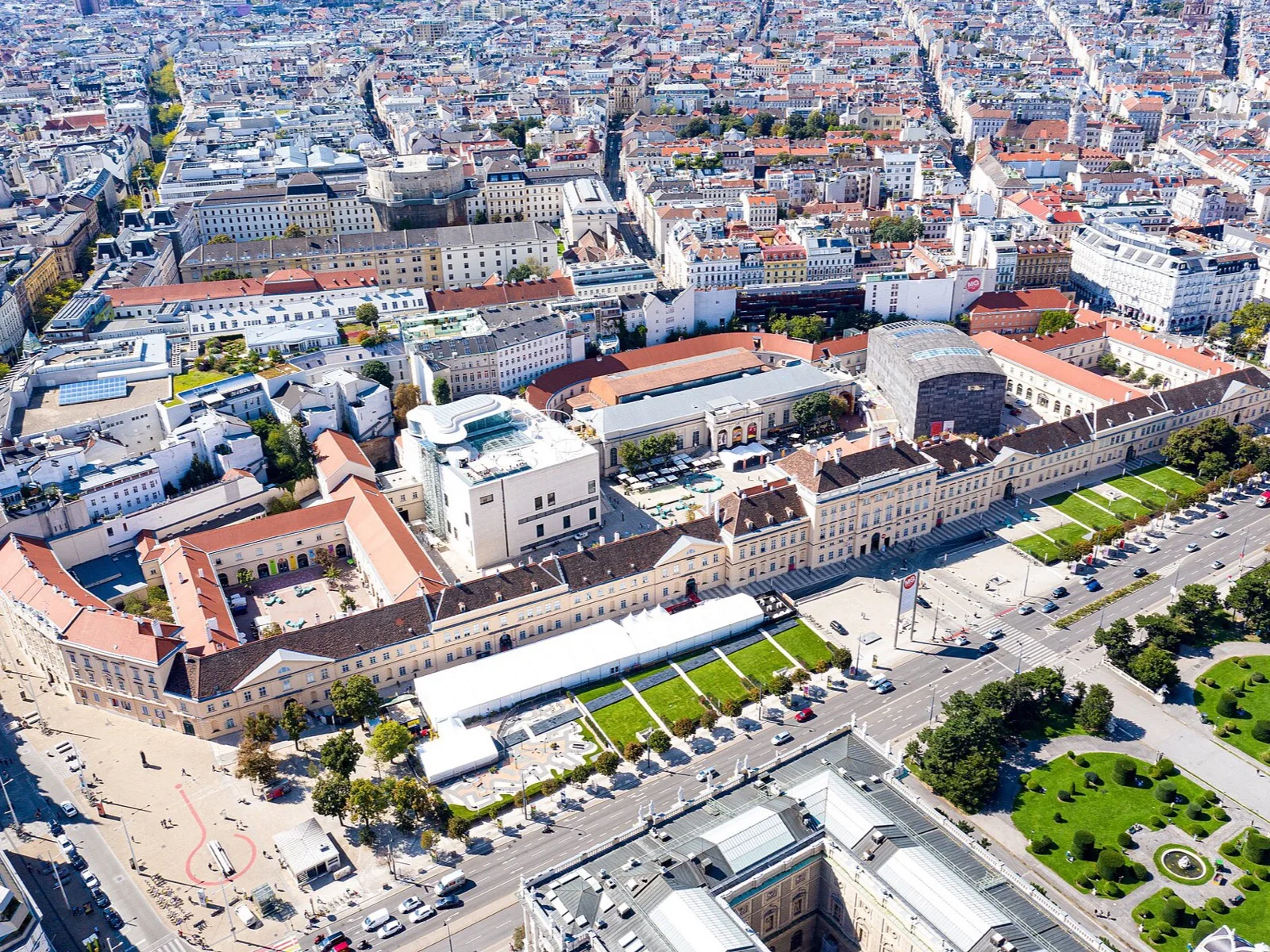
Vienna isn’t a shopping capital like Milan or Paris, but it has its own addresses - and above all its own mix: imperial-era heritage houses next to young designers, luxury miles next to street markets, and a shop culture where many businesses have been family-run for generations. If you know where to look, you’ll find things that only exist in Vienna.
It gets much easier once you know that Viennese shopping concentrates on a handful of streets. Each has a clear character, a price level and a crowd of its own. Here they are side by side, then in detail.
Vienna’s shopping streets at a glance
| Shopping street | District | Character | Price level | Metro |
|---|---|---|---|---|
| Mariahilfer Straße | 6th and 7th | Chains, widest range, longest street | mid | U3 Neubaugasse/Zieglergasse, U6 Westbahnhof |
| Kärntner Straße | 1st | Pedestrian zone, tourists, brands and souvenirs | mid to high | U1/U3 Stephansplatz, U1/U2/U4 Karlsplatz |
| Graben and Kohlmarkt | 1st | Luxury, imperial purveyors, jewellers | high | U1/U3 Stephansplatz, U3 Herrengasse |
| Neubaugasse | 7th | Viennese labels, concept stores, vintage | mid | U3 Neubaugasse |
| Landstraßer Hauptstraße | 3rd | Everyday retail, Wien Mitte The Mall | mid | U3/U4 Landstraße-Wien Mitte |
| Favoritenstraße | 10th | Long pedestrian zone, cheap, local | low | U1 Reumannplatz/Keplerplatz |
| Meidlinger Hauptstraße | 12th | Pedestrian zone, local, barely touristed | low to mid | U4/U6 Längenfeldgasse, U6 Niederhofstraße |
Short version: to see everything once, walk Mariahilfer Straße. For luxury, go to the Kohlmarkt. For Viennese brands, Neubaugasse. To save money, head to Favoriten or the Brunnenmarkt.
Mariahilfer Straße (6th district)
Vienna’s longest shopping street, roughly 1.8 kilometres from the Westbahnhof area to the MuseumsQuartier. Mainstream chains (H&M, Zara, Mango) alongside Austrian brands: Wolford (hosiery, founded 1950 in Bregenz), Tostmann (traditional dress), Schella Kann (Viennese designer).
The street has two halves with different personalities. The lower stretch towards Westbahnhof is cheaper, denser and louder, with more phone shops and discounters. The upper stretch towards the MuseumsQuartier gets calmer and more upmarket, and holds the more interesting shops. Large sections are a shared-space zone, so you walk in the street rather than along its edge.
Getting there: U3 to Zieglergasse or Neubaugasse for the middle, U6 to Westbahnhof for the lower end, U2 MuseumsQuartier for the top. Timing: on Saturday afternoons the MaHü is as full as a rush-hour metro car; weekday mornings are far more pleasant. Staying in the district puts it on your doorstep - see hotels in Mariahilf.
Kärntner Straße (1st district)
The classic link between St. Stephen’s Cathedral and the State Opera, entirely pedestrianised and the most walked shopping street in the old town. International brands, jewellery, and heritage houses such as Swarovski and J. & L. Lobmeyr (glass and chandeliers since 1823, with a small museum upstairs).
Honestly: Kärntner Straße is the most touristy of Vienna’s shopping streets and the range reflects that. Its real value is the location - it runs past nearly everything you want to see in the old town anyway, and the side lanes towards Neuer Markt and Himmelpfortgasse are more interesting than the main axis. Getting there: U1/U3 Stephansplatz at the north end, U1/U2/U4 Karlsplatz at the south.
Graben and Kohlmarkt (1st district)
The luxury axis. Kohlmarkt, Graben and Kärntner Straße form the old town’s “golden U”: all pedestrianised, all connected, with the cathedral as the fixed point.
On the Kohlmarkt the big international luxury houses stand shoulder to shoulder, with Demel, the imperial court confectioner, at the top end. The Graben is broader in range, with jewellers, the toy shop Kober and the plague column in the middle. This is also where you find the imperial purveyors, some of whose shopfronts still carry the double-headed eagle - worth the walk for the look alone.
The Golden Quarter between Tuchlauben, Bognergasse and Seitzergasse continues the luxury theme in restored palaces, and is far quieter than the Kohlmarkt. You can walk through it in ten minutes. Getting there: U1/U3 Stephansplatz or U3 Herrengasse.
Neubaugasse and the Viennese labels (7th district)
Neubau is the district of Viennese own-brands, and Neubaugasse is its spine - much more pleasant on foot since it became a shared-space zone. Park (concept store, Burggasse), Mühlbauer (hats, a Viennese family firm), Anukoo (fair fashion), plus small labels along Kirchengasse.
If you are looking for “young Vienna”, this is it. The best route runs from the U3 station Neubaugasse through Kirchengasse to Burggasse and then into the side streets. Cafés and small galleries sit between the shops, so treat it as half a day with breaks rather than a shopping list.
Landstraßer Hauptstraße (3rd district)
The shopping street of the embassy quarter, far less touristed than anything inside the Ring. Its anchor is Wien Mitte The Mall at the station of the same name, with the usual chain mix under one roof. The street itself is mostly everyday retail: chemists, bakers, opticians and a few long-established specialists.
That is too little for a dedicated shopping day - but for anyone staying in the 3rd district or changing trains at Wien Mitte it is the most practical address in the city. Arriving from the airport on the CAT puts you here anyway. Getting there: U3/U4 Landstraße-Wien Mitte.
Favoritenstraße (10th district)
The longest pedestrian zone in Vienna outside the old town, and the shopping street with the lowest prices. Between Reumannplatz and Keplerplatz you get discounters, phone shops, Turkish and Balkan grocers, bakeries and textile discounters.
There is essentially nothing touristic here, and that is the point: to see where Vienna does its everyday shopping, Favoritenstraße beats Kärntner Straße. Reumannplatz is also home to Tichy, a Viennese ice cream institution. Getting there: U1 Reumannplatz or Keplerplatz.
Markets and flea markets
The Naschmarkt is a food market with restaurants and a clear tourist focus. The Naschmarkt flea market on Saturdays starts at the western end: real antiques mixed with junk, and the earlier the better - dealers and collectors come at dawn, and by midday the best is gone. Haggling is expected, politely and without drama.
The Karmelitermarkt in Leopoldstadt is more multicultural and less touristed, with a farmers’ market on Saturdays and a dense brunch scene around it. The Brunnenmarkt in the 16th district is Vienna’s longest street market, Turkish and Austrian in character, with genuine market prices.
Vintage shops in the 6th and 7th districts: Burggasse, Westbahnstraße, Kirchengasse. The best density in Vienna, from curated designer second hand to sold-by-the-kilo.
Opening hours and Sundays
Viennese shops open in the morning on weekdays and close in the early evening, usually earlier on Saturdays. The times posted at the shop itself are the ones that count - the spread between chains and small shops is wide.
Important for planning: retail in Austria is closed on Sundays. Open are railway station shops (Hauptbahnhof, Westbahnhof), petrol station shops, museum shops, emergency pharmacies, and bars and restaurants. So Sunday shopping is not a thing - use the day for museums, a coffee house or a trip out instead. Our list of free things to do has ideas.
Prices and tax-free shopping
International chains cost roughly what they cost anywhere in Western Europe. It gets interesting with the things you can only get here: traditional dress, hats, manufactory goods. Quality has its price, and it lasts decades.
Travellers resident outside the EU can reclaim VAT above a minimum purchase value: ask in the shop for the tax-free form and get it stamped at the airport before departure. You need to be able to present both receipt and goods, so don’t pack them away and check them in first.
What to take home from Vienna
We have a separate, detailed guide for gifts and keepsakes: Souvenirs from Vienna - with specific products, shops and price brackets, from Manner wafers to Augarten porcelain.
The short version: Sacher-Torte in its wooden box, Manner wafers, a Mühlbauer hat, wine straight from a Heuriger estate, or Augarten porcelain if the budget allows. Skip the Mozart-print souvenir stalls at Stephansplatz - the shops at the Kunsthistorisches Museum or in the MuseumsQuartier have curated ranges for barely more money.
Where to stay for a shopping trip
Around Mariahilfer Straße. From Mariahilf and Neubau you can walk to the MaHü, the concept stores and the old town, and the U3 reaches Stephansplatz in minutes. To sleep inside the pedestrian zone itself, look at the Innere Stadt, where you pay noticeably more for the location. There are hotels in every price bracket, and our district overview explains which one suits which kind of trip.