Vienna is one of those cities where the neighborhood you book decides what kind of trip you have. Not because the distances are punishing, they are not, but because the districts have genuinely different personalities: imperial, academic, creative, suburban, vinous. Pick the right one and the city organizes itself around you. Here is how the map works, followed by a straight comparison of the ten districts this site covers.
First, the numbers
Vienna is divided into 23 numbered districts (Bezirke), and the numbering is not random. The 1st district, the Innere Stadt, is the old town inside the Ringstraße, the grand boulevard built where the city walls used to stand. From there the numbers spiral outward, roughly clockwise, in widening rings. The 2nd through 9th form the belt just outside the Ring, and everything from 10 up sits beyond the Gürtel, the second ring road.
Two things worth knowing before you book. Viennese people almost always say the number rather than the name: not “I live in Mariahilf” but “I live in the sixth.” Postal codes encode it too, so 1070 means the 7th. And the number is only a rough proxy for distance, because a well-connected address in the 13th can beat an awkward corner of the 3rd.
This guide covers the ten districts where visitors realistically stay. The numbers missing below are residential areas with almost no visitor accommodation.
The 1st district, Innere Stadt: postcard Vienna
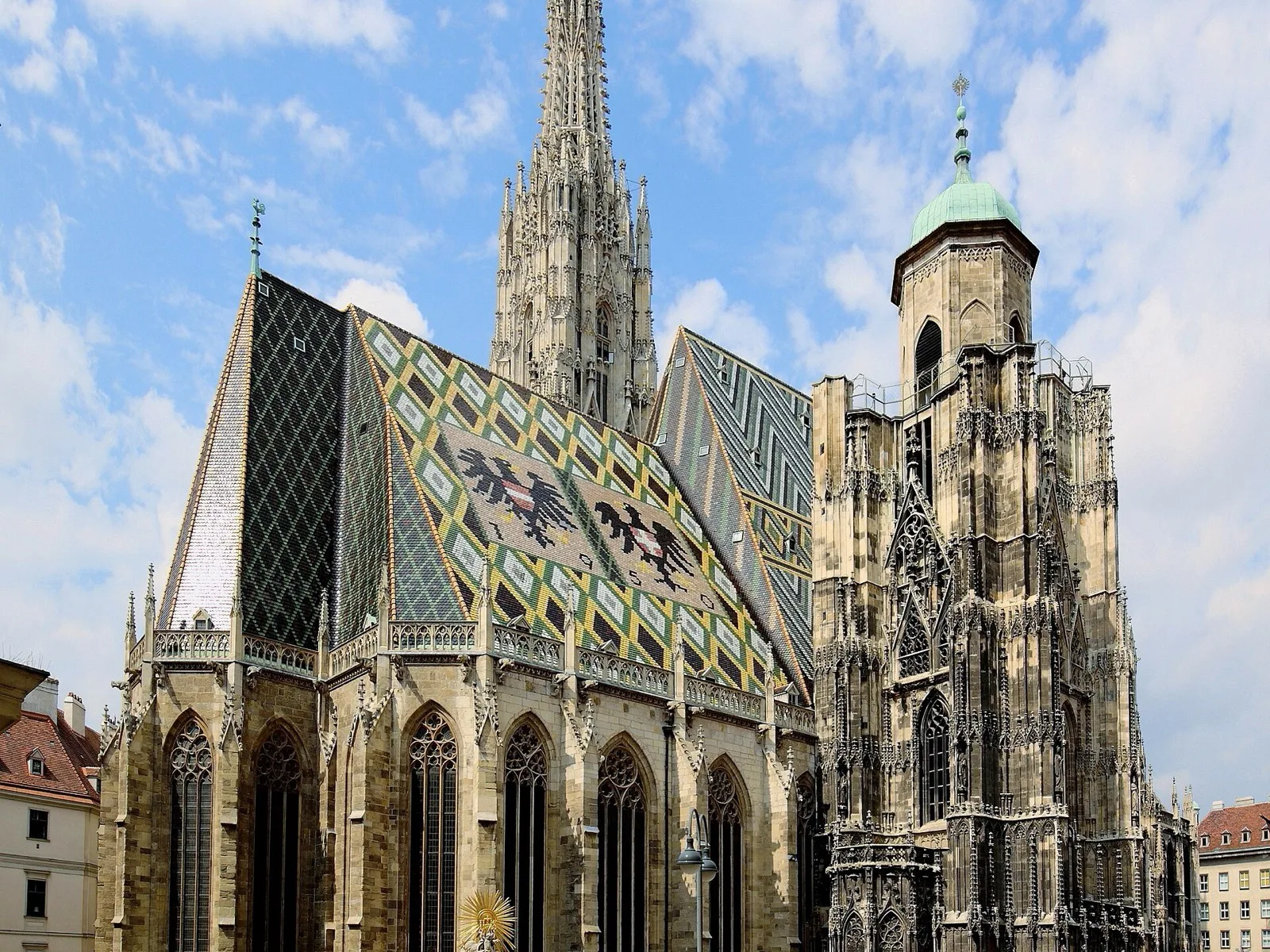
Everything you came for is here, packed into barely a square mile: St. Stephen’s Cathedral, the Hofburg, the State Opera, the Albertina. You will not need a transit ticket for the classic sights. The trade-off is honest: more tourists sleep in the Innere Stadt than locals live in it, cheap food and supermarkets are scarce, and the nightlife is elegant rather than exciting. Right for first-timers and opera travelers; wrong for tight budgets. Rooms here mean the luxury tier: Hotel Sacher, Hotel Imperial, Park Hyatt, with Hotel Am Parkring as the most reasonable central option.
The 2nd, Leopoldstadt: green and lived-in
An island between the Danube Canal and the Danube, with the Prater and its 1897 Ferris wheel on one side and the Baroque Augarten on the other. Leopoldstadt is not sightseeing territory, it is a working neighborhood with markets, parks and a Saturday food market at Karmelitermarkt. Runners and cyclists love it: the Prater’s chestnut-lined Hauptallee and the Danube Island are on the doorstep. Ten U-Bahn minutes to Stephansplatz, or a 15-minute walk across the canal. Prices drop noticeably the moment you cross the water: Hotel Stefanie on Taborstraße, the pop-art Wilhelmshof and the plain City Rooms studios near Praterstern. Light sleepers should avoid the immediate Praterstern area.
The 3rd, Landstraße: art and easy arrivals
Quiet, stately, embassy-lined. The draw is the Belvedere, where Klimt’s “The Kiss” hangs, plus the Hundertwasserhaus a short tram ride away. The practical argument is Wien Mitte station, where the U3, U4 and S-Bahn meet and the CAT airport train departs, which makes Landstraße the smoothest district to arrive in and leave from. Evenings are dead quiet, which is either the point or the problem. Range runs from the family-run Gartenhotel Gabriel City with its own garden, through the Eurostars Embassy, up to the design-forward Andaz Vienna.
The 4th, Wieden: small, central, sensible
One of the smallest districts and arguably the best location-to-price ratio in the city. The Naschmarkt sits on its border, the Karlskirche is a few minutes away, and Karlsplatz puts the U1, U2 and U4 under your feet. Wieden has students, vintage shops and wine bars in the Freihausviertel, and no luxury hotels at all. That is the point: for what one four-star night costs in the 1st, you often get several nights here. Strong on apartments and self-catering, from Hotel Schani with its self check-in to Adagio Vienna City, City Rooms and the plain, cheap Kolping Wien Central.
The 6th, Mariahilf: the widest choice
Mariahilf is Mariahilfer Straße, Vienna’s longest shopping street, running from the MuseumsQuartier down to Westbahnhof station. Few districts on this site offer a wider price spread, which makes it the flexible choice when budget and location are pulling against each other. The U3 runs beneath the shopping street, the U4 along the Wienzeile heads straight to Schönbrunn. The honest caveats: the main drag is crowded by day and the Westbahnhof surroundings are functional, not pretty. Book a side street. From Hotel Motto with its rooftop bar and Das Tyrol at the top, through Hotel Terminus by the Naschmarkt and Stanys near the station in the middle, down to Pension Mozart, the Tourotel at Westbahnhof and Kolping Wien Central on Gumpendorfer Straße.
The 7th, Neubau: creative Vienna
Concept stores on Neubaugasse, record shops on Burggasse, and the cobbled Biedermeier lanes of Spittelberg, with the MuseumsQuartier and the Kunsthistorisches Museum sitting right on the district edge. Neubau is where returning visitors stay: 20 minutes on foot to Stephansplatz, the best density of good restaurants outside the center, and almost no chain hotels. Two caveats: individuality costs money, and there is very little green space. The signature addresses are the boutique kind, Altstadt Vienna where no two rooms match, and Town Apartments for stays of three nights or more.
The 8th, Josefstadt: the quiet one
Vienna’s smallest district, and the one visitors almost never consider. Bourgeois apartment buildings, the cobbled Lange Gasse, the Baroque Piarist Church, and the Theater in der Josefstadt. There are essentially no tourists in Josefstadt, which is exactly the appeal for anyone on a second or third visit. Twenty minutes on foot to the old town through some of the prettiest residential streets in the city. The hotel supply is tiny and personal, best represented by Hotel Pension Wild, a classic Viennese pension where the hosts know the regulars by name. If you want nightlife, the 8th offers sleep.
The 9th, Alsergrund: academic and fair-priced
The university district: lecture halls, the huge AKH hospital, the Freud Museum on Berggasse, and the Servitenviertel, a pocket of cobbled lanes and bistros that people compare to a French quarter. Alsergrund has the friendliest price level of the inner districts and a genuine residential feel. Tram D, the U4 along the canal, the U6 on the Gürtel and the U2 at Schottentor cover it well, and you can walk into the old town past the Votive Church. Good for longer stays and repeat visitors: the Sobieski Town Apartments in the Servitenviertel and Pension Vera on Alser Straße. Sidewalks roll up early.
The 13th, Hietzing: Schönbrunn on your doorstep
Green, well-off, and built around Schönbrunn Palace, its park, the Gloriette and the world’s oldest zoo. The real advantage: you are in the palace gardens before the coach tours arrive, which no central hotel can offer. Beyond lie villa streets and the Lainzer Tiergarten, a fenced stretch of the Vienna Woods with wild boar. The U4 reaches Karlsplatz in about 15 minutes without changing. Rooms in Hietzing are usually bigger and cheaper than equivalents closer in, and parking is far easier, which matters if you drive. We currently list no hotels out here, so treat it as a day-trip destination rather than a base - and note that dining choice is limited, so evenings mean a subway ride or an early night.
The 19th, Döbling: vineyards and views
Vienna with actual working vineyards. Grinzing and the villages around it are Heuriger country, wine taverns where growers pour their own young wine, and from the Kahlenberg you look out over the whole city to the Danube. Tram 38 links Grinzing with Schottentor on the Ring, tram D runs to Nussdorf, and the U4 terminates at Heiligenstadt; reckon on 20 to 30 minutes to the center depending on where you land. Döbling is a deliberate choice for a second trip, not a first one, and in winter, when many Heurigen close, it gets very quiet. We currently list no hotels this far out, so most visitors come up for an evening and head back into town afterwards.
What it costs, district by district
The pattern across our listings is consistent. The luxury tier lives almost entirely in the 1st district, entering with the DO & CO and climbing steeply at the famous houses: the Sacher, the Imperial and the Park Hyatt.
Mid-range is where the outer districts win. Four-star houses in the 2nd, 3rd, 4th and 6th cost noticeably less than comparable rooms inside the Ring, and apartments often undercut a comparable hotel room again, with the simple studios at City Rooms at the bottom of that scale.
The budget segment is Vienna’s quiet strength, because cheap here still means central. Kolping Wien Central is the cheapest entry, classic pension rooms sit only a little above it, and they are spread evenly across the 4th, 6th, 8th and 9th, all a short subway ride or walk from the old town. For the money of a single night in the 1st district you often get several nights out here. Current rates are shown on the individual hotel pages.
Frequently asked questions
Which district should a first-time visitor pick? The 1st if budget allows, the 4th or 6th if it does not. All three put the major sights within walking distance or one short subway ride.
Is it worth staying outside the Ring to save money? Yes, and the saving is real. The 2nd, 4th, 8th and 9th are ten to twenty minutes from the center and price like ordinary neighborhoods, because that is what they are.
Which district is best with kids? The 2nd for the Prater and the Augarten, or the 3rd for a hotel with an actual garden. Both give you space, which the dense inner districts do not.
Do I need a car? No. The transit network is dense and the center is walkable. If you do drive, the 13th and 19th are the only districts here where parking is genuinely relaxed.