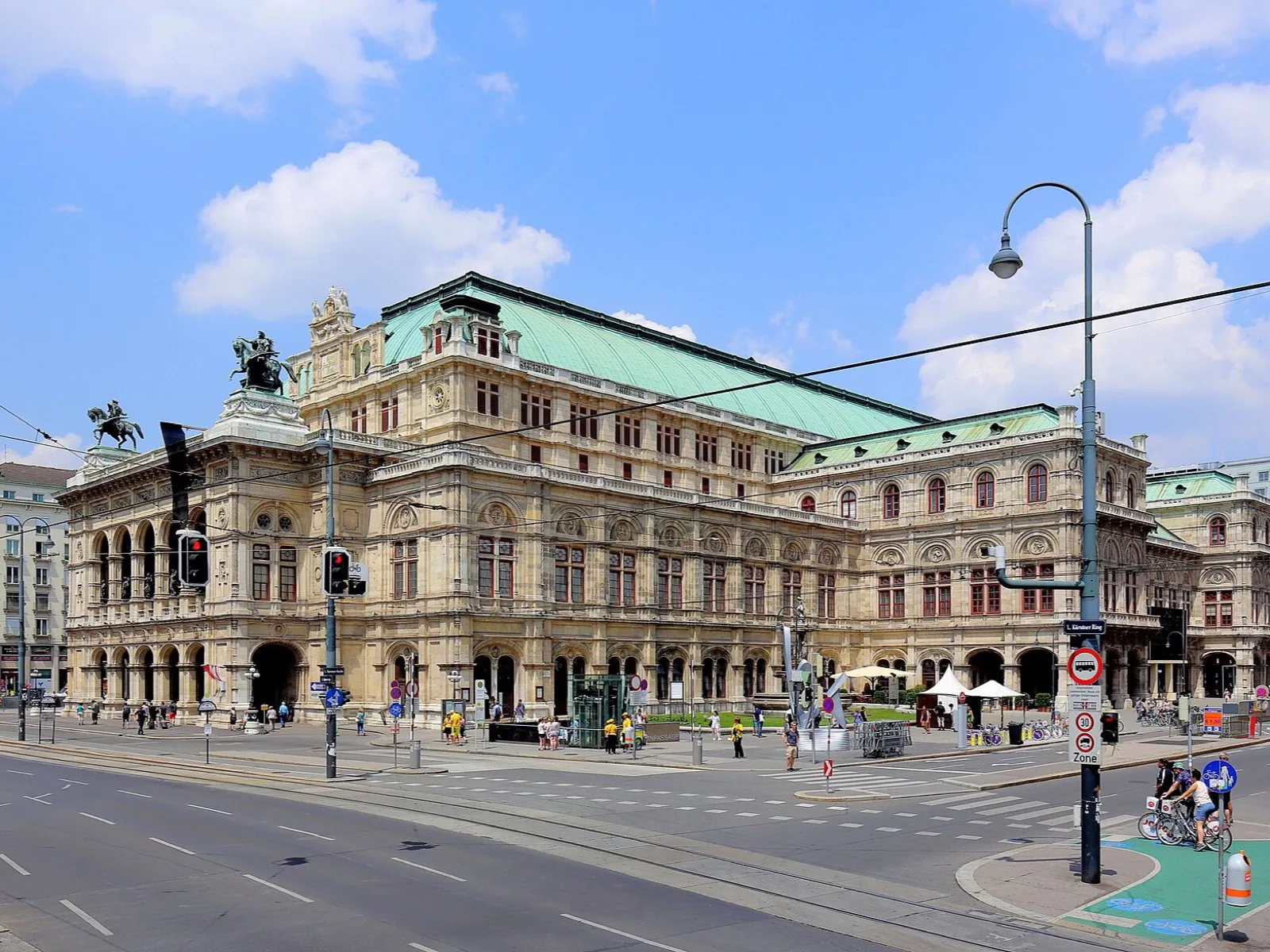
Vienna’s transit is internationally considered a model: dense network, reliable, cheap. The Wiener Linien run five subway lines and dozens of tram and bus routes, complemented by the ÖBB’s suburban S-Bahn. When quality-of-life rankings praise Vienna, the transit network is regularly cited as one of the reasons - and as a visitor you benefit directly: hardly any sight is more than a few minutes’ walk from a station. Here are the practical bits.
The network at a glance
- U-Bahn (subway): U1 (red), U2 (purple), U3 (orange), U4 (green), U6 (brown). The U5 is under construction, with the first stretch expected in the late 2020s. Trains run every few minutes during the day - no timetable needed.
- Tram: around 30 lines, some of which define the city (trams 1 and 2 run along the Ringstraße, great for sightseeing).
- Bus: dense network inside and outside the rings, night buses (N-lines) from midnight.
- S-Bahn: mainly for the airport connection, the suburbs, and Lower Austria.
The stations tourists use most: Karlsplatz (U1/U2/U4, State Opera and Naschmarkt), Stephansplatz (U1/U3, the cathedral), Volkstheater (U2/U3, the big museums), Schönbrunn (U4) and Praterstern (U1/U2, the Giant Ferris Wheel in Leopoldstadt).
Plan routes with the Wiener Linien’s WienMobil app or Google Maps. Both work reliably. The app also sells tickets, which saves you the machine. Both need mobile data; if you arrive from outside the EU, our eSIM for Austria guide explains the cheapest way to get it.
Tickets
Vienna prices by time, not distance. One ticket lets you use all modes and lines as long as you travel in one direction. There are no zones within the city - the entire urban area is a single zone; only the airport lies outside it.
- Single ride: around €2.40 (2024/25 pricing, may change). At kiosks, machines or via app.
- 24h pass: roughly €8, worth it from three rides.
- 48h and 72h passes are cheaper per day.
- Weekly pass: around €17, worth it from five days. Careful: it runs by calendar week from Monday to Monday, not seven days from purchase - arriving on a Wednesday, you’re better off stacking 72h passes.
- Vienna City Card (Now or Easy): bundles a 24/48/72h ticket with sight discounts. Do the math: worth it from about 4-5 paid entries.
Important: validate your ticket before passing the subway barriers or boarding a tram. App tickets are valid from purchase; paper tickets go into the blue validators. Inspections are rare but expensive (a €100 fine plus the fare) - and inspectors work in plain clothes, so you only spot them when the badge comes out.
Which tram to take
Trams 1 and 2 run along the Ringstraße, effectively a sightseeing tour: Opera, Burgtheater, City Hall, Parliament, University, stock exchange. An hour, one single ticket. Neither line loops the entire ring, so you change once - or walk the missing stretch.
Tram D runs from the main station along the ring towards Beethoven-Gang, perfect for the Belvedere and for reaching the wine taverns of Döbling.
Tram 38 from Schottentor to Grinzing is the classic Heuriger tram.
To the airport
- CAT (City Airport Train): 16 minutes, every 30 minutes, from Wien Mitte. Pricier (around €15 one-way) but direct, with city check-in for some airlines.
- S7: 25 minutes, every 15 minutes, same route. Works with a regular ÖBB ticket or the VOR Vienna + Schwechat fare. Much cheaper - the sensible choice for most travelers.
- ÖBB Railjet: from the main station to the airport in about 15 minutes at standard rail fares. Handy if your hotel is towards Wieden or Favoriten.
- Vienna AirportLines (bus): 20-25 minutes to Schwedenplatz, Westbahnhof or UNO-City. €11 one-way.
- Taxi/Uber: €35-50 depending on time and destination. Makes sense with luggage or late at night.
One thing to know for all rail options: your Vienna transit ticket covers travel to the city boundary; for the stretch to Schwechat airport you need a supplementary ticket.
Out at night
On Friday and Saturday nights and before public holidays, the U-Bahn runs through the night, roughly every 15 minutes. On weeknights, night buses (N-lines) take over from midnight, most departing from Schwedenplatz or the Opera. All regular tickets are valid at night, with no surcharge. For the way back from a Heuriger or a club that means: you’ll almost always get home without paying for a taxi.
With kids and disabilities
Kids under six always ride free. Ages 6-15 ride free during Vienna school holidays, on Sundays and public holidays. All subway stations are step-free, trams have low-floor cars (marked on the display), buses have ramps. Prams travel free; in the U-Bahn, use the marked multi-purpose areas.
Choosing your hotel by transit
Picking a hotel by transit access saves time every single day: places in the Inner City barely need transit at all, but you pay for the location. Hotels at U-Bahn hubs like Praterstern, Westbahnhof or Landstraße are often cheaper and still put you anywhere in ten minutes. Rule of thumb: three stops further out right on the U-Bahn beats central but ten minutes’ walk from every station.
What tourists often get wrong
- Blocking the left side of the escalator: walk on the left, stand on the right.
- Standing by the doors in the tram instead of moving inside: costs everyone room.
- Not validating the ticket: “but I have one” doesn’t count.
- The U-Bahn at Stephansplatz at rush hour: two stops on foot is often faster.
- Forgetting the airport supplement: the city ticket ends at the boundary, and the inspector on the airport train has heard every excuse.
Frequently asked questions
Do I need a new ticket for every ride? No - with a time pass (24h/48h/72h/weekly) you ride without limit. With single tickets: one journey in one direction including transfers, then a new ticket.
Can I buy tickets on board? Trams have machines (often coins only); on buses you can sometimes buy from the driver at a surcharge. The WienMobil app or a station machine is more relaxed.
Does Google Maps work reliably? Yes, including real-time departures. The WienMobil app is slightly better for disruptions and night buses.
Is a taxi ever worth it? Late on a weeknight with luggage, or for destinations off the network - otherwise rarely. Transit is almost always faster than sitting in Ringstraße traffic.