Vienna has more landmarks than a holiday holds. This list is ordered by importance, but each entry tells you what it costs in time, money and patience, so you can plan realistically instead of giving up with museum fatigue on day three. All ten are easy to reach by public transport; a rental car in Vienna is more burden than help.
1. St. Stephen’s Cathedral
Landmark number one, right in the middle of the Innere Stadt and directly above the Stephansplatz subway station (U1/U3). The front part of the nave is free to enter; you pay a moderate fee for the catacombs, the towers and the full interior. The south tower climb is 343 steps with no break and no lift, but rewards you with the view of the famous tiled roof. Plan: 45 minutes inside, plus 45 minutes for the tower if you’re up for it. Best time: first thing in the morning, before the tour groups arrive - the square out front is packed from midday.
2. Schönbrunn Palace
Habsburg summer residence with 1,441 rooms. You won’t see them all: the Imperial Tour shows 22 rooms, the Grand Tour 40. Add the gardens (free, open year round), the Gloriette and the zoo, the oldest in the world. Plan: half a day to a full day - Schönbrunn isn’t a stop, it’s an excursion. Buy tickets online in advance, or you’ll stand in line while your time slot ticks away. Getting there: U4 to Schönbrunn or Hietzing; the palace sits in the 13th district. Best time: weekdays and early; it’s busiest in summer and during Advent, when the Christmas market fills the main courtyard.
3. Belvedere Palace
Klimt’s “Kiss” hangs in the Upper Belvedere, alongside Schiele, Kokoschka and Prince Eugene’s baroque splendour as the frame. The garden between the Upper and Lower Belvedere is free and worth a stroll in its own right. Plan about two hours for the museum. It’s in the 3rd district, easy by tram (line D stops right at the Upper Belvedere). Tip: your ticket has a time slot and the “Kiss” room is almost always besieged - head there first after entry, then enjoy the rest in peace.
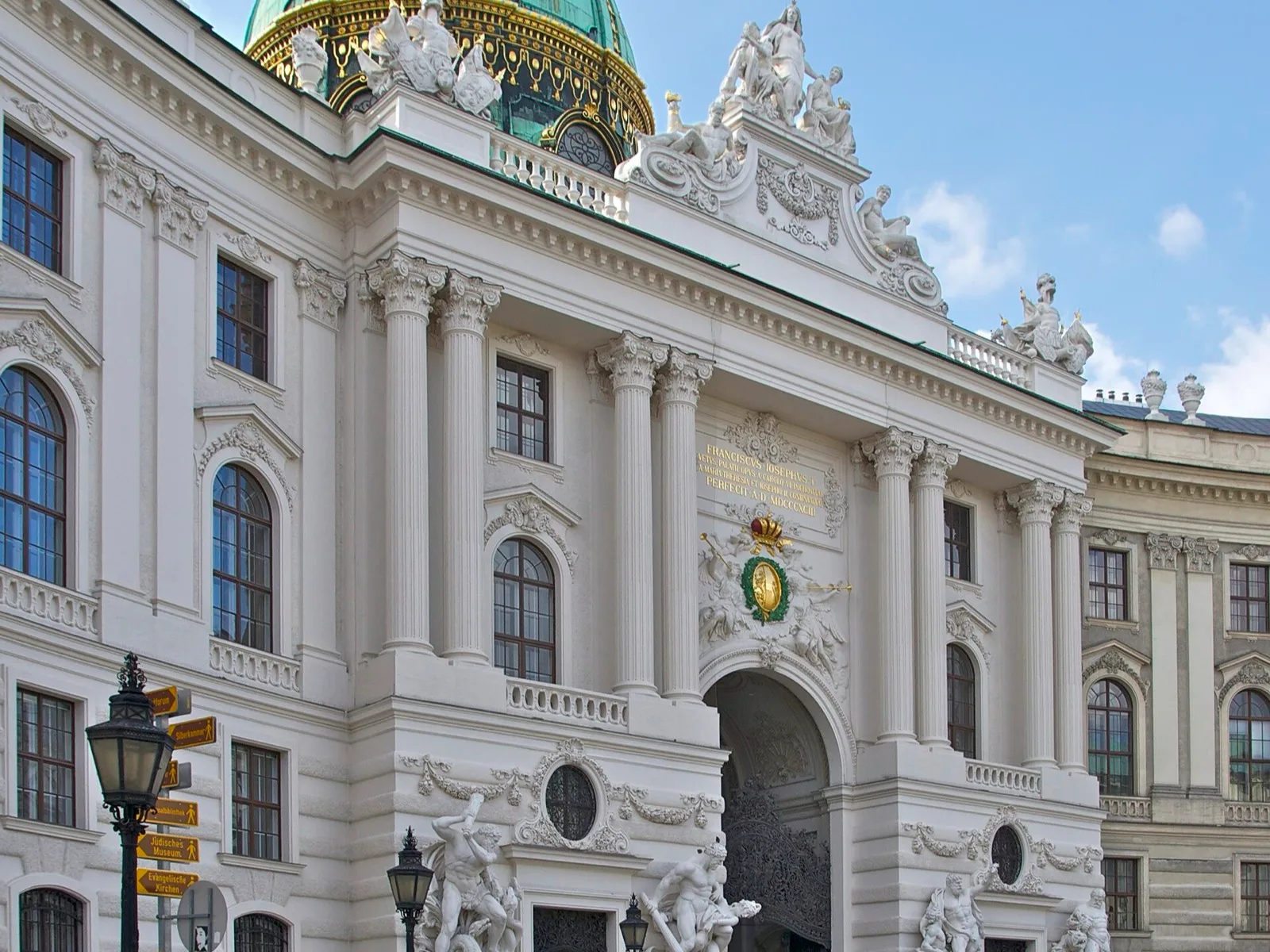
4. Hofburg
Imperial winter residence, today the seat of the Federal President. Sisi Museum, imperial apartments and silver chamber come as a combined ticket. Plan: 90 minutes to two hours. The Spanish Riding School is right next door (separate admission; the Lipizzaners’ morning exercise is the cheaper alternative to the gala performance). The complex is big enough to get lost in - that’s fine, the passageways and courtyards are part of the experience. Free portion: Heldenplatz, the Burggarten and the passages cost nothing.
5. Kunsthistorisches Museum
The Habsburgs’ world-class art collection: the world’s largest Bruegel holdings, Vermeer, Caravaggio, Raphael, plus the Kunstkammer with the famous Saliera. Plan: three hours minimum, the building is enormous. Thursdays have late opening - the evening hours are noticeably quieter. The domed hall with its café is one of the loveliest breaks in the city. If you only manage one museum visit in Vienna, make it this one.
6. MuseumsQuartier
Europe’s largest cultural complex, housed in the former imperial stables: Leopold Museum (the world’s largest Schiele collection), mumok (modern and contemporary), Kunsthalle, ZOOM children’s museum. The courtyard with its colourful Enzi loungers is free and works as a rest stop between two programme points - open-air vibe in summer, punch stands in winter. Plan: two hours per museum, or just the courtyard and a coffee. Right at the U2 Museumsquartier station, opposite the Kunsthistorisches Museum.
7. Naschmarkt
Vienna’s most famous market: around 120 stalls, Mediterranean meets Habsburg, with restaurants in between serving from breakfast through dinner. On Saturdays a flea market joins at the western end - Vienna’s biggest, with everything from antiques to junk. Best planned as an extended lunch break, not as the main event; the market is closed on Sundays. Getting there: U4 Kettenbrückengasse. Watch the prices: right on the market you pay a tourist premium, and not every stall’s quality justifies it.
8. Prater and Giant Ferris Wheel
The Giant Wheel has stood since 1897 and is still turning - one rotation takes about a quarter of an hour and is most beautiful at dusk, when the city slowly switches its lights on. The Prater’s main avenue is 4.5 km long and car-free, ideal for a walk, a run or a rental bike. The Wurstelprater around it is a classic amusement park - good with kids, free to enter, you pay per ride. The Prater lies in Leopoldstadt; get there via U1/U2 Praterstern.
9. Hundertwasserhaus
Friedensreich Hundertwasser’s inhabited gesamtkunstwerk in the 3rd district: sloping floors, trees growing out of windows, not a straight line in sight. Very photogenic from outside, but no interior access - real tenants live there. Across the street is the Hundertwasser Village with shops and a café in the same style, and a few minutes’ walk away the Kunst Haus Wien with its museum. Plan: 30 minutes plus travel, easy to combine with the Belvedere in the same district.
10. Vienna State Opera
One of the world’s most important opera houses. Daytime tours take you through the building; in the evening there are performances - and with standing places from around 15 euros, one of the cheapest world-class cultural experiences anywhere (sold on site roughly 80 minutes before curtain, expect a queue). Dress code for standing room: relaxed. The Opera Ball at the end of February is the social peak of the year, and in summer the house streams performances free onto a screen on Herbert-von-Karajan-Platz.
Worth visiting even if not top 10
- Karlskirche: baroque dome with a panoramic lift to the top.
- Musikverein: for the legendary acoustics of the Golden Hall, not just the concert.
- Albertina: temporary exhibitions often beat the permanent collection.
- Donauinsel in summer for swimming and cycling, Kahlenberg in autumn for the view over city and vineyards.
How to plan
Three days = 5 or 6 points; more becomes ticking boxes instead of seeing things. A week = all of them plus at least one day with no programme. Count on one major museum per day at most, or the galleries start to blur. If you plan more than three paid highlights, do the maths on the Vienna Card (public transport plus discounts); otherwise it rarely pays off. Cluster smartly: St. Stephen’s, the Hofburg and the State Opera are within walking distance of each other; Belvedere and Hundertwasserhaus share the 3rd district; Schönbrunn and the Prater are each their own half day. Staying central saves travel time every single day - browse our hotel overview for well-placed options.
Frequently asked questions
Which sights are free? St. Stephen’s (front section), the Schönbrunn palace gardens, the Belvedere garden, the MuseumsQuartier courtyard, the Naschmarkt, the Prater grounds and the Hundertwasserhaus from outside. That alone fills a day and a half.
Do I need to book tickets in advance everywhere? Only Schönbrunn is essential. Also recommended for the Belvedere (time slots) and, in high season, the Kunsthistorisches Museum. At St. Stephen’s and the Hofburg you can usually walk in spontaneously.
What’s the best season for sightseeing? Spring and autumn: mild weather, bearable crowds. December is atmospheric thanks to the Christmas markets, but busy. In high summer, early starts and museum afternoons help against the heat.
Can I do the top 10 in a weekend? No, and trying will ruin the weekend. Four to five points over two days is realistic: say St. Stephen’s, the Hofburg and the State Opera on day one, Schönbrunn and the Belvedere on day two.